Biblical Solutions to Anxiety
According to the Bible and the writings of Ellen G. White, anxiety is not presented as something that makes a person weak or unloved by God. Rather, it is often connected to the realities of living in a sinful world, human limitations, misplaced trust, and spiritual struggles. At the same time, both emphasize that God offers peace, hope, and strength.
Here are some biblical and Ellen G. White perspectives on why people become anxious:
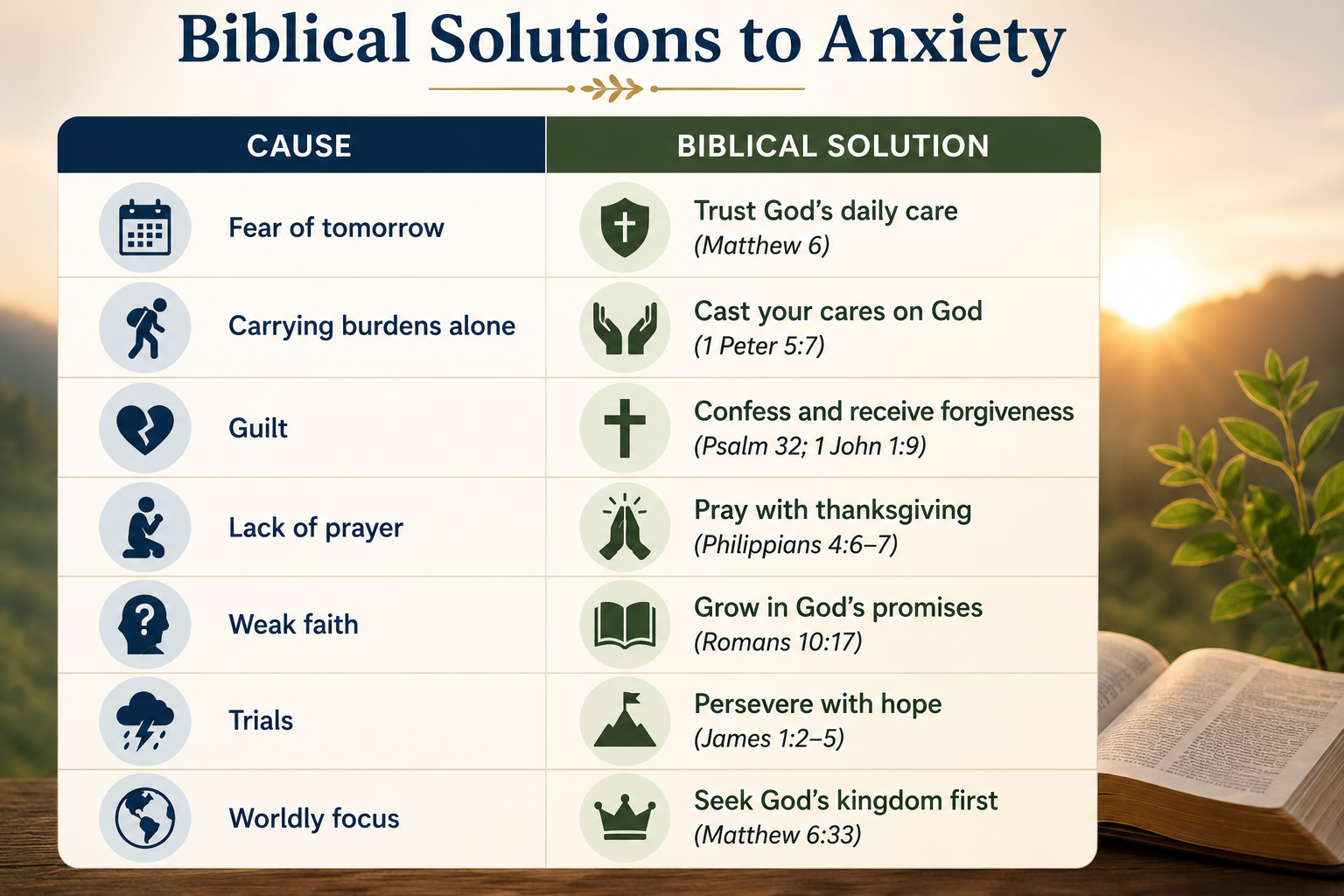
1. Worrying About Tomorrow Instead of Trusting God
Bible
Jesus taught that anxiety often comes from focusing on the uncertainties of the future rather than on God's care.
"Therefore I say unto you, Take no thought for your life... Your heavenly Father knoweth that ye have need of all these things."
— Matthew 6:25–34
Principle:
- Fear of the unknown
- Trying to control what only God can control
- Losing sight of God's daily provision
Ellen G. White (The Ministry of Healing, p. 251)
"Nothing tends more to promote health of body and soul than does a spirit of gratitude and praise... It is a positive duty to resist melancholy, discontented thoughts and feelings—as much a duty as it is to pray."
She explains that dwelling on worries instead of God's promises increases anxiety.
2. Carrying Burdens Alone
Bible
"Cast thy burden upon the Lord, and He shall sustain thee."
— Psalms 55:22
"Casting all your care upon Him; for He careth for you."
— 1 Peter 5:7
Principle:
People become anxious when they try to carry life's burdens by themselves rather than entrusting them to God.
Ellen G. White (Steps to Christ, p. 121)
"Many who profess to be Christ's followers have an anxious, troubled heart because they are afraid to trust themselves with God."
She encourages believers to surrender their worries to God daily.
3. Fear Instead of Faith
Bible
"For God hath not given us the spirit of fear; but of power, and of love, and of a sound mind."
— 2 Timothy 1:7
Fear grows when faith weakens.
4. Guilt and Sin
Bible
David described how unconfessed sin affected both his emotional and physical well-being.
"When I kept silence, my bones waxed old through my roaring all the day long."
— Psalms 32:3
Anxiety may arise from:
- guilt
- shame
- unresolved conflict with God
- Confession and forgiveness bring peace.
5. Trials and Difficult Circumstances
Bible
Even faithful people experienced anxiety.
- David fled from enemies.
- Elijah became discouraged after great victory.
- Paul the Apostle wrote about "fightings without, fears within."
The Bible recognizes that suffering can produce emotional distress.
6. Lack of Prayer
Bible
"Be careful for nothing; but in every thing by prayer and supplication with thanksgiving let your requests be made known unto God.
And the peace of God... shall keep your hearts and minds through Christ Jesus."
— Philippians 4:6–7
Prayer is God's antidote to anxious hearts.
7. Focusing on Earthly Things
Jesus warned against allowing wealth, possessions, or worldly concerns to dominate our thoughts.
"The cares of this world... choke the word."
— Mark 4:19
When life's priorities become unbalanced, anxiety often increases.
Ellen G. White's Health Perspective
One unique contribution of Ellen G. White is her emphasis on the connection between mind, body, and spirit. She taught that anxiety can also be worsened by unhealthy habits.
She encouraged:
- Regular exercise
- Time in nature
- Adequate rest
- Nutritious food
- Useful work
- Trust in God
- Prayer
- Service to others
She believed these habits help restore emotional balance while supporting spiritual growth.
A Balanced Perspective
It's important to note that the Bible does not teach that all anxiety is caused by a lack of faith or personal sin. Many faithful people experienced deep distress, fear, and emotional struggles. Likewise, while Ellen G. White strongly emphasized trust in God and healthy living, she also acknowledged that physical illness, exhaustion, grief, and life's burdens can affect the mind and emotions. Today, many Christians recognize that persistent anxiety disorders can involve biological, psychological, social, and spiritual factors.
Seeking support through prayer, trusted relationships, healthy habits, and qualified mental health care can all be appropriate and consistent with caring for the whole person.
Together, Scripture and Ellen G. White encourage believers to bring their anxieties to God, cultivate trust in His promises, and care for their physical, emotional, and spiritual well-being.